701-418-8000


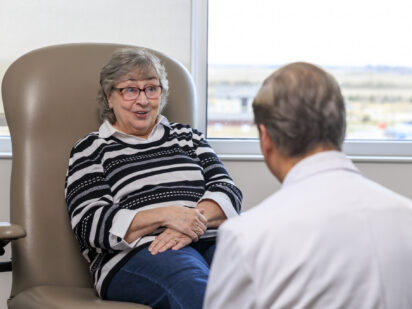

Life was good for Joan Houston. She spent 30 years teaching accounting at Minot State University and enjoyed every minute helping students reach their goals. Then, near the end of her career, things took a drastic turn.
For over three years, Houston experienced throbbing pain in both feet that she couldn’t escape. It just kept getting worse. She told her students, “I know that it’s unprofessional to teach with your shoes off, but it’s also unprofessional to teach with tears rolling down your face because your feet hurt so badly.”
Even specially ordered wide shoes did not help. The only relief came when she took her shoes off. The pain was so excruciating that in the winter, she would walk barefoot through the snow and on icy sidewalks to soothe the burning.
Knowing that surgery could lay her up for a while, Houston kept putting off seeing a doctor. Then, a breast cancer diagnosis, combined with the foot pain, made her reflect on whether she could continue teaching. Ultimately, the side effects of chemotherapy made that decision for her.
“What finally stopped me from doing the job I loved was chemo,” Houston said. The breast cancer itself was the “perfect cancer,” meaning it was encapsulated and had not spread. The chemo, however, was devastating.
She added, “One treatment put me in the hospital for over a week, and I knew I could never go back to teaching. The damage done to my body and the brain fog that resulted made me realize I could no longer continue instructing higher-level courses where you have to be ‘on it’ every day.”
For Houston, chemo was the “gift that kept on giving,” and one of its worst effects was neuropathy in both feet. Between that and her painful bunions, she was now in pain whether she wore shoes or not and decided she couldn’t live like this.
“I thought, ‘Okay, I can’t do anything about the neuropathy, but I can do something about those painful bunions.’ I was missing out on life because I couldn’t wear shoes. And where can you go without wearing shoes?” Houston said.
She made an appointment with Tyson Williams, DPM, and the podiatry team at Trinity Health.
“When she first came to see me, Joan was dealing with a very painful condition that was causing not just pain, but difficulty with her in walking and in doing some of the normal things of daily life,” said Dr. Williams. “She wanted to walk, to enjoy life, to be around family and to do things that most people want to do. She was very, very frustrated with that.”
Dr. Williams explained that Houston had a prominence of bone called a tailor’s bunion on both feet, and the joint was becoming out of place. “It was starting to push out on her skin…it was almost becoming a dislocated joint, and it was sticking out of her foot, causing pressure,” Dr. Williams said.
After X-rays and a discussion of the options, they determined the condition was severe enough that surgery gave her the best chance to cure the pain.
Houston was more than ready. Although surgery can be scary and the recovery long, she went in with a positive mindset and full trust in her care team. “Sometimes you just have to pay the dues and go through it to get where you need to be…there were so many reasons to expect a good result, especially with the kind of care you receive from Dr. Williams and Trinity Health’s podiatry team,” Houston said.
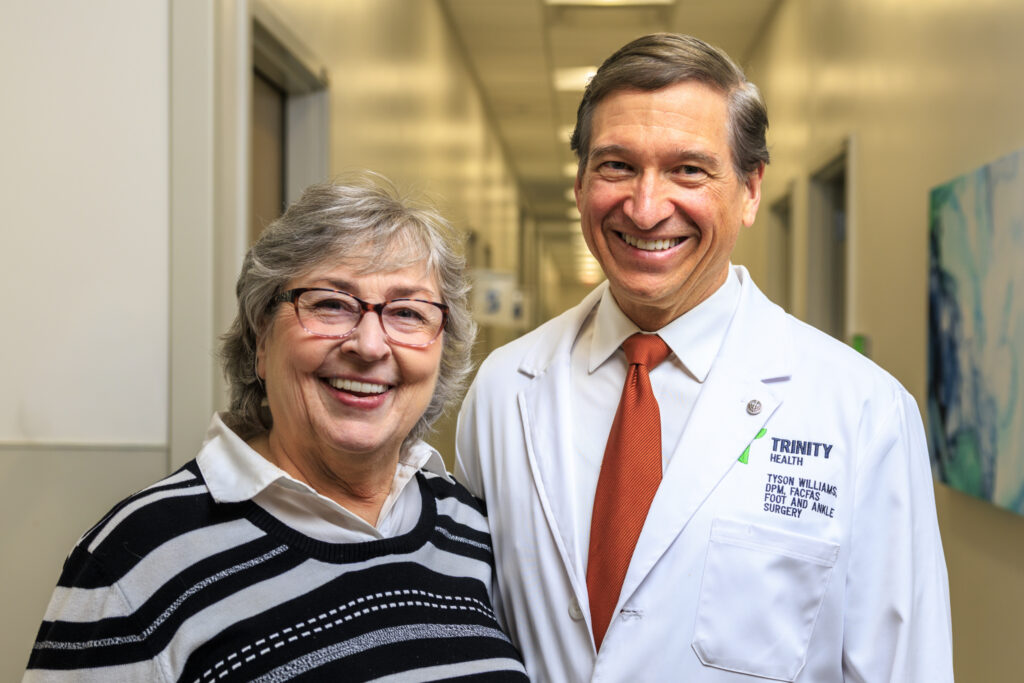
Given the severity of her deformities, Dr. Williams removed part of the joints rather than realigning them. The decision paid off, and Houston saw immediate improvement during her recovery.
“The recovery looks different for just about every surgery that I do,” said Dr. Williams. “In her case, she was able to put some weight on her feet and still walk. Although it was uncomfortable, she didn’t have to be in a wheelchair at any time. There are times when I deal with this type of deformity that the patient needs to be non-weight bearing for a period of time, sometimes up to six weeks.”
As a final step, Houston was measured for custom orthotics and was now able to begin to enjoy the little things in life.
“One of my happy moments is being able to buy normal tennis shoes. Yes, I still wear extra-wide, but they are much cuter-looking shoes,” Houston said.
But her recovery means much more than a better selection of shoes. It’s about getting her life back and living as pain-free as possible. For Dr. Williams, that has been the most rewarding part.
“It’s just a joy to see her able to walk and do the things she wants to do with her life. She wasn’t able to do any of that, or very little of it, before. Now, she has her life back, and she’s able to be as active as she wants to be and wear the shoes she wants to wear,” said Dr. Williams.
Houston’s life looks very different now than it did when she was walking barefoot through the snow just to numb the pain. Having come out on the other side, she wants others who are living with pain to know they don’t have to accept it.
“If you can do anything to help the pain, even make it less, don’t give up and don’t stop until things are the best they can be. It’s your life, and you want the best quality of life you can have,” Houston said.
Trinity Health’s foot and ankle specialists can help you get back on your feet and resume the activities you enjoy. To make an appointment with a podiatrist, call 701-418-7480.
See below for a video on Joan’s story.